
Insights

The Recycling Narrative vs. Reality: Why Israel Still Buries Its Waste

The Recycling Narrative vs. Reality: Why Israel Still Buries Its Waste

Arie Zauberman, Smart Waste Venture General Manager

The Times of Israel, March 29, 2026

For years, the conversation has revolved around a “recycling revolution” and the promise of a circular economy.

But when you look at the numbers, a different reality emerges.

In 2024, Israel generated 6.4 million tons of municipal waste – a 2% increase year over year. At the same time, recycling volumes dropped by 1.56 million tons compared to 2023.

This isn’t a temporary fluctuation. It’s a structural gap between ambition and execution.

The contrast becomes even sharper in a global context. Roughly 85% of Israel’s waste still ends up in landfills. In the European Union, that figure is closer to 35%, and across OECD countries, about 42%.

On a per capita basis, Israel produces 691 kilograms of waste annually – far above the 534-kilogram average in developed economies. Europe isn’t just generating less waste; it has built systems that know how to deal with it. Austria recycles around 60% of its waste, and in parts of Italy, that number reaches 80%.

So what’s holding Israel back?

It’s not technology.

Israel has the engineering capability and is already investing in advanced recycling and treatment facilities. The real issue lies elsewhere: policy design and economic incentives.

As long as landfilling remains the cheapest and easiest option for municipalities, recycling will never scale. Israel’s landfill levy remains significantly lower than in most European countries, where pricing mechanisms are deliberately structured to discourage landfill use. In some cases, untreated waste is simply banned from being buried.

And here’s the missed opportunity: nearly 70% of what we currently define as “waste” isn’t waste at all. It’s raw material – capable of being converted into energy, reused in industrial processes, and reintegrated into the economy.

Instead, much of it is mixed, buried, and effectively lost.

This is more than an environmental issue – it’s an economic failure. Valuable resources are being taken out of circulation, while the costs of pollution and land use continue to rise. In practice, we are paying twice: once for the damage, and again for the lost value.

The common response – adding more color-coded bins or expanding public awareness campaigns—misses the point.

Without the right infrastructure, these efforts cannot deliver meaningful results.

Real change depends on large-scale investment in integrated waste treatment systems: facilities that sort, recover, and process materials at industrial scale. In such systems, metals, plastics, paper, and cardboard are separated and reintroduced into the supply chain. Organic waste is processed biologically, producing biogas and generating renewable electricity.

This is how landfill volumes can be reduced by more than 50%.
This is how a circular economy actually works – not as a concept, but as infrastructure.

The path forward is not complicated – but it does require decisive policy.

Landfilling must become economically unattractive. That means significantly increasing landfill taxes and redirecting those funds toward industries that rely on recycled materials. It also means creating incentives for municipalities and private operators to develop viable alternatives.

Regulation plays a critical role as well. Governments must set clear standards—not only for waste treatment, but also for the use of recycled materials in manufacturing. In the long term, landfilling untreated waste should not just be discouraged—it should be prohibited, much like the discharge of untreated wastewater into natural ecosystems.

Israel does not lack knowledge or technology.
It lacks a coherent, consistent policy framework.

And time is not on our side.

Every day, thousands of tons of recoverable materials are buried instead of reused. Every day, the gap between potential and reality grows wider.

The real question is no longer whether change is possible.
It is whether we are willing to make it happen.

Original article (Hebrew):
https://www.zman.co.il/666549/

The Recycling Narrative vs. Reality: Why Israel Still Buries Its Waste Arie Zauberman, Smart Waste

Advanced Technology and a Competitive Market: The Real Alternative to Landfill Waste

The era of landfilling is over.

Each year, Israel generates over 6 million tons of municipal waste, and nearly 80% of it is still buried in the ground. Landfilling is the worst possible solution for waste treatment. It contaminates soil and groundwater, emits greenhouse gases for decades, and consumes valuable land resources in a small country like ours. But the greatest damage is something else entirely — as long as landfilling remains available and cheap, there is no real incentive to develop and build advanced waste treatment facilities. Landfilling stifles innovation and progress in the field.

Recent remarks by the Chairman of Hiriya, in which he calls on the state to expand waste landfilling, may harm the development of the waste treatment market and condemn us to many more years of environmentally damaging landfilling. The technology is available, and only one thing prevents the State of Israel from making a true revolution in waste treatment — the continued reliance on cheap and seemingly convenient landfilling.

Today, Israel lacks many end-of-line waste treatment facilities. These technologies make it possible to generate energy from waste, recycle raw materials, and reduce the volume of landfilled waste by 60% or more. In Sweden, for example, less than 1% of waste is landfilled. In Germany, the figure is under 2%. Why does Israel remain so far behind with 80%?

The answer is simple — as long as the state allows landfilling at low prices, there is no economic justification for investing in advanced treatment facilities. The current situation creates a market distortion. Instead of real competition between different technologies and approaches to waste treatment, there is a de facto monopoly of landfilling, which prevents the development of better and more environmentally friendly solutions.

The state must declare a clear and binding timeline for ending landfilling. Once the market understands that landfilling will no longer be an option in a few years, we will see real progress in initiatives and projects for end-of-line solutions. More companies and entrepreneurs will enter the field, competing to provide the most efficient, environmentally responsible, and cost-effective solutions. The result will be lower prices and continuous technological improvement, alongside a significant reduction in landfilled waste. Every ton of waste buried in the ground is a missed opportunity to generate energy, recycle materials, and create a true circular economy.

Global experience proves that when countries set clear targets for reducing landfilling, the market responds quickly and efficiently. In the European Union, landfill reduction directives led to a major leap forward in waste treatment technologies. Today, leading European countries landfill almost no waste at all, achieving this at reasonable costs while creating green jobs and clean energy.

Israel can and should lead in the field of waste treatment, just as it leads in other technological domains. The technology exists, is proven, and ready for implementation. The path forward requires a simple but critical decision — ending landfilling. This is not a call for massive government intervention or huge subsidies. On the contrary, it is a call to allow the free market to operate, competition to develop, and technology to prove itself, under enabling regulation and clear, decisive policy.

The choice lies with the state.

It must choose a cleaner, more efficient, environmentally and economically sound future. Once the market receives a clear signal, results will follow. It is time to stop burying our waste — and our opportunities — in the ground, and begin building an advanced, competitive, and environmentally responsible waste treatment industry. The time has come to declare it: the era of landfilling is over.

Aryeh Zauberman is the CEO of Smart Waste (Smart Waste Ltd.)

Direct link to the article:
https://www.calcalist.co.il/local_news/article/bj7rq3nweg

The era of landfilling is over. Each year, Israel generates over 6 million tons of

Advanced Technology and a Competitive Market: The Real Alternative to Landfill Waste

The era of landfilling is over.

Each year, Israel generates over 6 million tons of municipal waste, and nearly 80% of it is still buried in the ground. Landfilling is the worst possible solution for waste treatment. It contaminates soil and groundwater, emits greenhouse gases for decades, and consumes valuable land resources in a small country like ours. But the greatest damage is something else entirely — as long as landfilling remains available and cheap, there is no real incentive to develop and build advanced waste treatment facilities. Landfilling stifles innovation and progress in the field.

Recent remarks by the Chairman of Hiriya, in which he calls on the state to expand waste landfilling, may harm the development of the waste treatment market and condemn us to many more years of environmentally damaging landfilling. The technology is available, and only one thing prevents the State of Israel from making a true revolution in waste treatment — the continued reliance on cheap and seemingly convenient landfilling.

Today, Israel lacks many end-of-line waste treatment facilities. These technologies make it possible to generate energy from waste, recycle raw materials, and reduce the volume of landfilled waste by 60% or more. In Sweden, for example, less than 1% of waste is landfilled. In Germany, the figure is under 2%. Why does Israel remain so far behind with 80%?

The answer is simple — as long as the state allows landfilling at low prices, there is no economic justification for investing in advanced treatment facilities. The current situation creates a market distortion. Instead of real competition between different technologies and approaches to waste treatment, there is a de facto monopoly of landfilling, which prevents the development of better and more environmentally friendly solutions.

The state must declare a clear and binding timeline for ending landfilling. Once the market understands that landfilling will no longer be an option in a few years, we will see real progress in initiatives and projects for end-of-line solutions. More companies and entrepreneurs will enter the field, competing to provide the most efficient, environmentally responsible, and cost-effective solutions. The result will be lower prices and continuous technological improvement, alongside a significant reduction in landfilled waste. Every ton of waste buried in the ground is a missed opportunity to generate energy, recycle materials, and create a true circular economy.

Global experience proves that when countries set clear targets for reducing landfilling, the market responds quickly and efficiently. In the European Union, landfill reduction directives led to a major leap forward in waste treatment technologies. Today, leading European countries landfill almost no waste at all, achieving this at reasonable costs while creating green jobs and clean energy.

Israel can and should lead in the field of waste treatment, just as it leads in other technological domains. The technology exists, is proven, and ready for implementation. The path forward requires a simple but critical decision — ending landfilling. This is not a call for massive government intervention or huge subsidies. On the contrary, it is a call to allow the free market to operate, competition to develop, and technology to prove itself, under enabling regulation and clear, decisive policy.

The choice lies with the state.

It must choose a cleaner, more efficient, environmentally and economically sound future. Once the market receives a clear signal, results will follow. It is time to stop burying our waste — and our opportunities — in the ground, and begin building an advanced, competitive, and environmentally responsible waste treatment industry. The time has come to declare it: the era of landfilling is over.

Aryeh Zauberman is the CEO of Smart Waste (Smart Waste Ltd.)

Direct link to the article:
https://www.calcalist.co.il/local_news/article/bj7rq3nweg

The era of landfilling is over. Each year, Israel generates over 6 million tons of

The Green Revolution: The Technological Park That Will Treat Waste Instead of Landfilling It.

The Green Revolution: The Technological Park That Will Treat Waste Instead of Landfilling It.

Currently, 80% of household waste in Israel is landfilled, but there’s good news: for the first time in the country, a new technological park will process over 400,000 tons of waste per year, converting it into green electricity and recycling many of its materials. This will enable local authorities to significantly reduce waste management costs while protecting the environment.

Where does the waste we throw away go? Of the more than 6 million tons of waste produced in Israel each year, 80% is landfilled. Landfilling not only consumes valuable land, it also pollutes groundwater, emits harmful greenhouse gases into the atmosphere, and causes numerous environmental damages. Landfill sites are disappearing, and disposal costs are rising sharply, forcing municipalities to spend hundreds of millions of shekels annually.

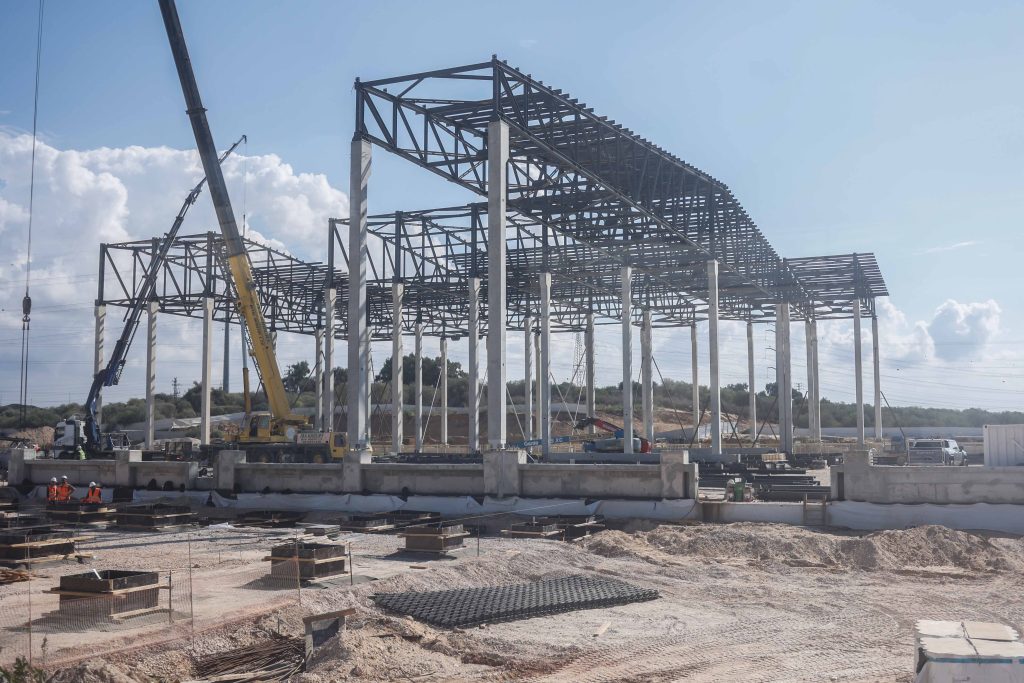
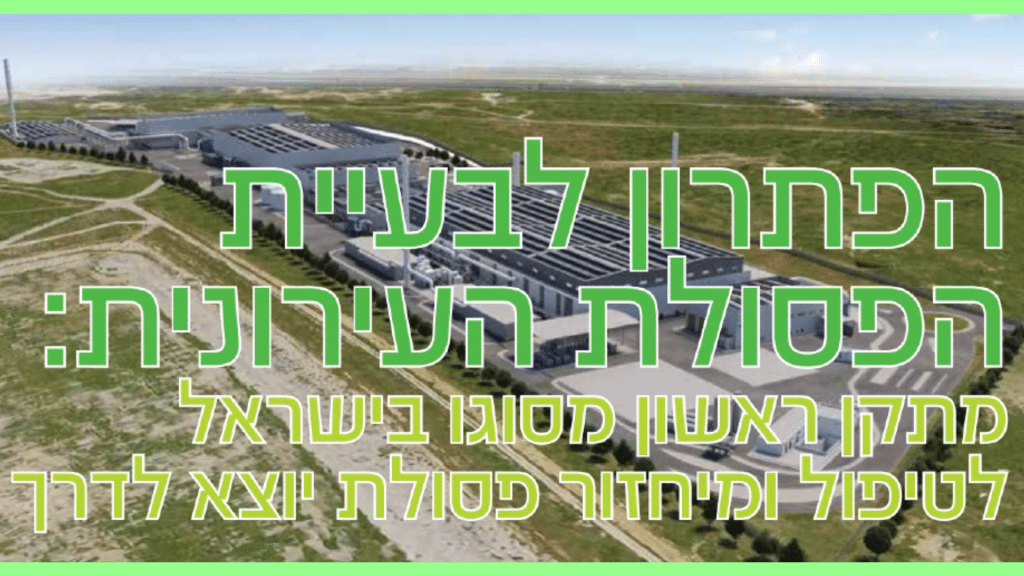
To lead the way toward a better future, Smart Waste, owned by the Shikun & Binui Group and the Blogen Group, is currently building an innovative park near the Shafdan site. It will be the largest and most advanced facility of its kind in Israel, treating over 400,000 tons of municipal waste annually.

Aryeh Zauberman, CEO of Smart Waste, sees the technological park as a true revolution. According to him, the solution will provide local authorities with a readily available, environmentally friendly, and competitive alternative, with costs lower than other market solutions—especially compared to environmentally harmful landfilling.

The park will be a breakthrough in waste management in Israel. We have taken on a challenging mission—to lead an environmental and technological solution at the highest global standard, while maintaining competitive pricing,’ Zauberman said.

What are the problems with landfilling waste?

Landfilling waste is one of the biggest environmental problems, and there are many reasons: it wastes valuable land that is becoming increasingly scarce. In addition, landfill sites cause serious environmental hazards—they pollute groundwater, emit harmful methane gas into the atmosphere, produce foul odors, and attract animals that can spread diseases. Furthermore, landfills are prone to fires that can cause additional air pollution.

The landfill solution is not sustainable: in Israel, unlike other advanced countries, per capita waste production is increasing, in contrast to the trend in the Western world, where waste generation is declining. Moreover, Israel’s population is growing rapidly, and waste volumes are rising accordingly, quickly approaching a point where there will be no more space for landfilling. It is crucial to find alternative solutions that can turn waste from an environmental nuisance into a resource—a product that can be used.

Saving municipalities and improving the environment.

The new technological park will help not only the environment but also significantly ease the burden on the surrounding local authorities. ‘Today, local authorities have the opportunity to be part of the environmental revolution and to lead a significant initiative with us that will save them substantial funds,’ says Zauberman. The park will allow them to reduce the high costs associated with waste collection, transportation, and landfilling. Additionally, it will replace old transfer stations that are an environmental nuisance in various cities, significantly reducing the number of trucks traveling through urban areas to these stations.

From waste to green electricity.

The technological park, to be built near the Shafdan site, will operate advanced sorting technologies that allow for increased recovery of materials for recycling. Unlike other sorting facilities, the park will treat the organic stream (wet waste) using anaerobic digestion, producing biogas for electricity generation and recyclable materials.

‘The planning and construction of the park involved some of the world’s leading companies,’ emphasizes Zauberman. ‘We will operate it as a closed system that benefits the environment, turning waste into a resource—both by generating green electricity and producing materials for recycling and reuse in various industries. In doing so, we are offering a solution to one of Israel’s most severe environmental problems today: waste landfilling.

How does it work?

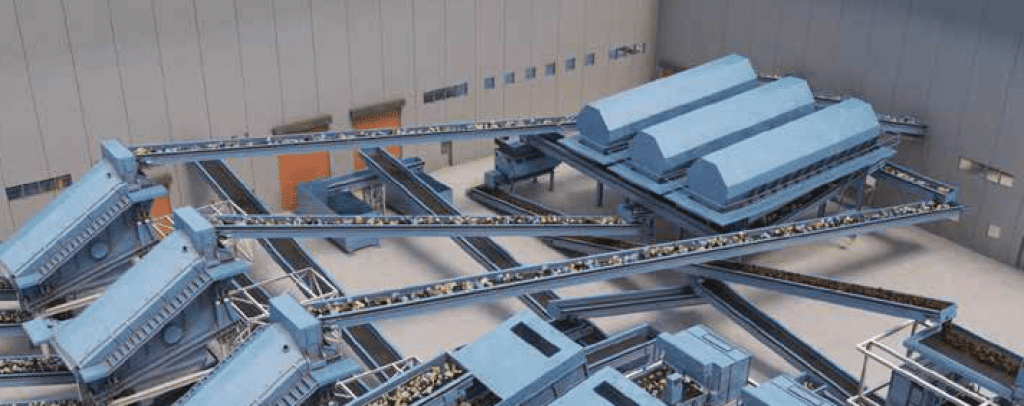
100% of the waste received at the park is treated after being received at the technological facility. The waste undergoes automatic sorting using advanced, high-level systems to maximize the recovery of materials for reuse. Organic waste is sent to digesters where biogas is produced. The biogas is cleaned of contaminants and used to generate 4.8 megawatts of green electricity fed into the power grid. Residual organic material undergoes a stabilization process, while other sorted residues go through biological drying.

In its initial phase, the park will reduce landfilling from 80% to 40%, and later, in collaboration with local authorities, it could reduce landfilling to as low as 20%. The park operates in enclosed buildings under negative pressure (preventing untreated air from escaping) and is connected to an advanced air treatment system to prevent odors, without burning waste.

The park is an environmental breakthrough. It is part of the solution to a national and local problem, improves environmental quality, and significantly reduces environmental nuisances. The park will operate under strict oversight by authorities and with full transparency to ensure a cleaner and safer environment.

Currently, 80% of household waste in Israel is landfilled, but there’s good news: for the

The waste crisis: local authorities demand the abolition of the royalty collection system from landfills.

The waste crisis: local authorities demand the abolition of the royalty collection system from landfills.

Local authorities claim that the increase in landfill disposal fees amounts to approximately NIS 150 million per year, a burden that could lead to their financial collapse. The broader crisis in the sector is making it extremely difficult for authorities to find suitable sites for waste disposal.

The Local Government Center is demanding that the Israel Land Authority (ILA) cancel the system of collecting royalties from waste landfill sites for the use of land. This demand is based on the claim that companies operating the landfills have begun passing on the additional fees, which were set several years ago, to the local authorities.

Local government officials warn that this situation could drive municipalities into financial collapse. This dispute adds to the wider waste disposal crisis caused by a shortage of landfill sites, which further limits the authorities’ ability to find appropriate locations for waste disposal.

About four years ago, the Israel Land Authority decided to change the method used to calculate royalties collected from landfill operators, ruling that operators would be required to pay per ton of waste. The decision was based on the assumption that the change would not harm local authorities. However, according to local government representatives, this assumption has proven incorrect.

Recently, several of the largest landfill sites informed local authorities that they are raising the fees charged to waste collection trucks in order to incorporate the royalty component.

In its appeal to the Israel Land Authority, the Local Government Center stated that local authorities are a “captive customer” of landfill operators, due to the lack of alternatives to landfilling and the fact that approximately 80% of waste in Israel is currently sent to landfills.

Therefore, local authorities have no choice but to pay the additional amount, which accumulates to an annual cost of approximately NIS 150 million. “This represents an extreme lack of reasonableness given the already exorbitant landfill costs,” the appeal states. “Local authorities are facing collapse, and any additional burden could tip the scales. We demand that the Israel Land Authority freeze the royalty requirement and use all the tools at its disposal to prevent the cost from being passed on to the authorities.”

The total amount collected from local authorities for landfilling is influenced, among other factors, by market concentration in the waste disposal sector, which prevents price reductions. Local government accuses the regulators—including the Israel Land Authority and the Ministry of Environmental Protection—of failing to address this concentration, and of not acting to establish waste treatment facilities that do not rely on landfilling, even as landfill fees continue to rise. These facilities include sorting and recycling plants and energy generation from waste. “The Israel Land Authority has the authority and capability to allocate land for the establishment of such facilities while creating economic incentives,” the Local Government Center noted in its appeal.

In recent years, the Ministry of Environmental Protection has initiated the establishment of several waste treatment facilities that do not rely on landfilling. One of the largest among them is the Smart Waste facility, currently under construction in Rishon LeZion, which is based, among other things, on biological decomposition processes that generate gas from which electricity can be produced. The facility is expected to begin operations in 2026, but its operation depends on signing agreements with local authorities to divert their waste to the facility. Due to the general uncertainty prevailing in the sector, signing these agreements has proven difficult.

To date, the Ministry of Environmental Protection has failed in its attempts to regulate landfill disposal prices and therefore turned to the inter-ministerial pricing committee to formulate recommendations. Although the committee reached conclusions, the Ministry of Finance has so far delayed their implementation. About three weeks ago, Minister of Environmental Protection Idit Silman and her ministry’s Director General, Assaf Yazdi, approached the Ministry of Finance and demanded that the committee be convened to reach a final decision on the matter.

In response, the Israel Land Authority stated:
“The royalty system was designed to create certainty. The transition to this system and the royalty rates by waste type were carried out in full and close coordination with the Ministry of Environmental Protection, with responsible implementation and at conservative, cautious levels. An economic analysis recently conducted by the Authority demonstrated that the royalty rates are significantly lower than the customary tariffs in the sector and leave wide profit margins for landfill operators, meaning there is no justification for passing the cost on to end consumers. If there are market failures as claimed, regulatory bodies such as the Competition Authority or the inter-ministerial pricing committee should address them; however, this is unrelated to the royalty mechanism and is not within the Authority’s mandate. The claim regarding land allocation is unfamiliar to the Authority. The regulator in this matter is the Ministry of Environmental Protection, and the Israel Land Authority works with it to provide land-related solutions for waste treatment facilities as required.”

Local authorities claim that the increase in landfill disposal fees amounts to approximately NIS 150

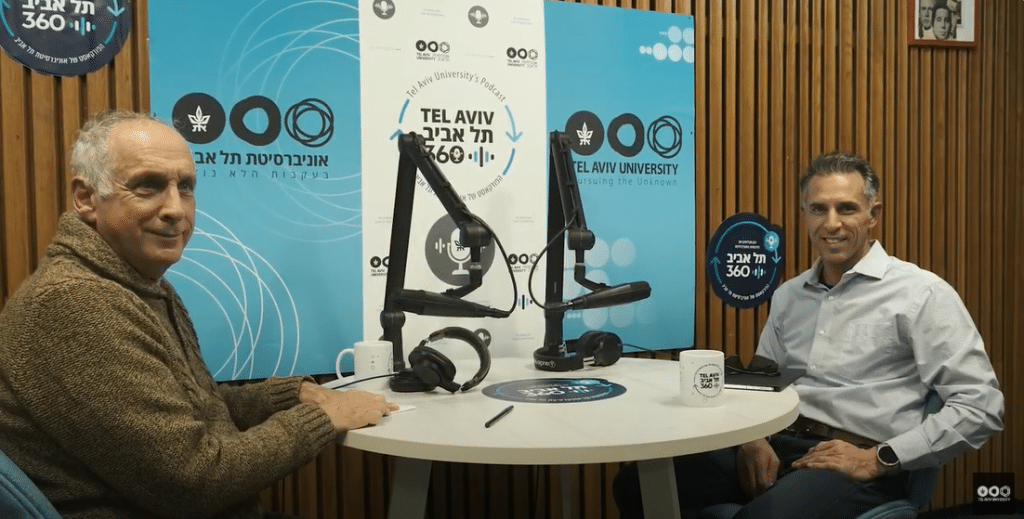
Podcast: We Must Reduce Municipal Waste Landfilling | Nature & Environment Channel – Tel Aviv 360

Podcast: We Must Reduce Municipal Waste Landfilling | Nature & Environment Channel – Tel Aviv 360

Dr. Michael Miro speaks with Aryeh Zauberman, CEO of Smart Waste, a company owned by the Shikun & Binui Group and the Blogen Group, which is establishing the technological park—a first-of-its-kind facility in Israel. The facility complies with regulatory requirements and the strictest European standards for municipal waste recycling.

Naturally, the best solution is reducing consumption, extending product use, and sorting waste at the source. These are basic prerequisites. However, Israel is not adequately prepared for this, and therefore the prevailing approach is to operate recycling parks, with the first and pioneering one being built in Rishon LeZion.

The park will process 100% of the municipal waste it receives and reduce the amount of waste landfilled from 80% to just 40%, while significantly increasing recycling rates.
According to Aryeh Zauberman, the company he leads will turn a nuisance into a resource.

Main objectives:

  • Reduce the volume of landfilling in Israel and positively impact national sustainability.

  • Lower the cost of separating dry and wet waste and improve recycling efficiency.

  • Promote local treatment solutions for all types of municipal waste, significantly reducing costs, noise, and environmental hazards.

  • Adhere to the strictest regulatory standards in the world and lead in environmental quality.

  • Serve as a technological and research center of excellence for waste treatment using smart, advanced technology.

  • Improve environmental quality and help every municipality and local authority become greener and more innovative.

Dr. Michael Miro speaks with Aryeh Zauberman, CEO of Smart Waste, a company owned by

Offering a new alternative for waste treatment: price, quality, and environmental care.

Offering a new alternative for waste treatment: price, quality, and environmental care.

An interview with the CEO of Israel’s advanced technological recycling park.

“The facility is an Israeli breakthrough, featuring technologies that have not yet been used in the country.”

“The facility is an Israeli breakthrough, featuring technologies that have not yet been used in

Turning waste into electricity, an initiative of the Southern Sorek Regional Authorities Cluster.

An advanced recycling park will enable electricity generation from municipal waste.

An advanced recycling park will enable electricity generation from municipal waste.

כתבת תדמית מגזין רשויות-1

From Nuisance to Resource – The Message of the Environmental Revolution in Israel.

An innovative waste treatment and recycling facility will reduce landfilling by 50%.

An innovative waste treatment and recycling facility will reduce landfilling by 50%.

Municipal waste recycling – how to do it smartly?

Waste landfilling causes direct environmental harm; it must be reduced.

Waste landfilling causes direct environmental harm; it must be reduced.

Smart Waste: the name you don’t know but is essential for all of us.

Did you know that today, eighty percent of Israel’s waste is buried in the ground?

Did you know that today, eighty percent of Israel’s waste is buried in the ground?

Israel’s first-of-its-kind facility for waste treatment and recycling is underway.

Israel’s first-of-its-kind facility for waste treatment and recycling is underway.

Waste treatment: the ideal versus the reality and the way forward.

Despite the promotion of recycling, waste treatment in Israel is still lacking.

Despite the promotion of recycling, waste treatment in Israel is still lacking.

The Shfdan Waste Sorting Project: Bank Hapoalim to Finance

Handling a thousand tons of municipal waste daily, recycling, and energy generation.

Handling a thousand tons of municipal waste daily, recycling, and energy generation.

No more posts to show
SMART WASTE
Privacy Overview

This website uses cookies so that we can provide you with the best user experience possible. Cookie information is stored in your browser and performs functions such as recognising you when you return to our website and helping our team to understand which sections of the website you find most interesting and useful.

This site is registered on wpml.org as a development site. Switch to a production site key to remove this banner.