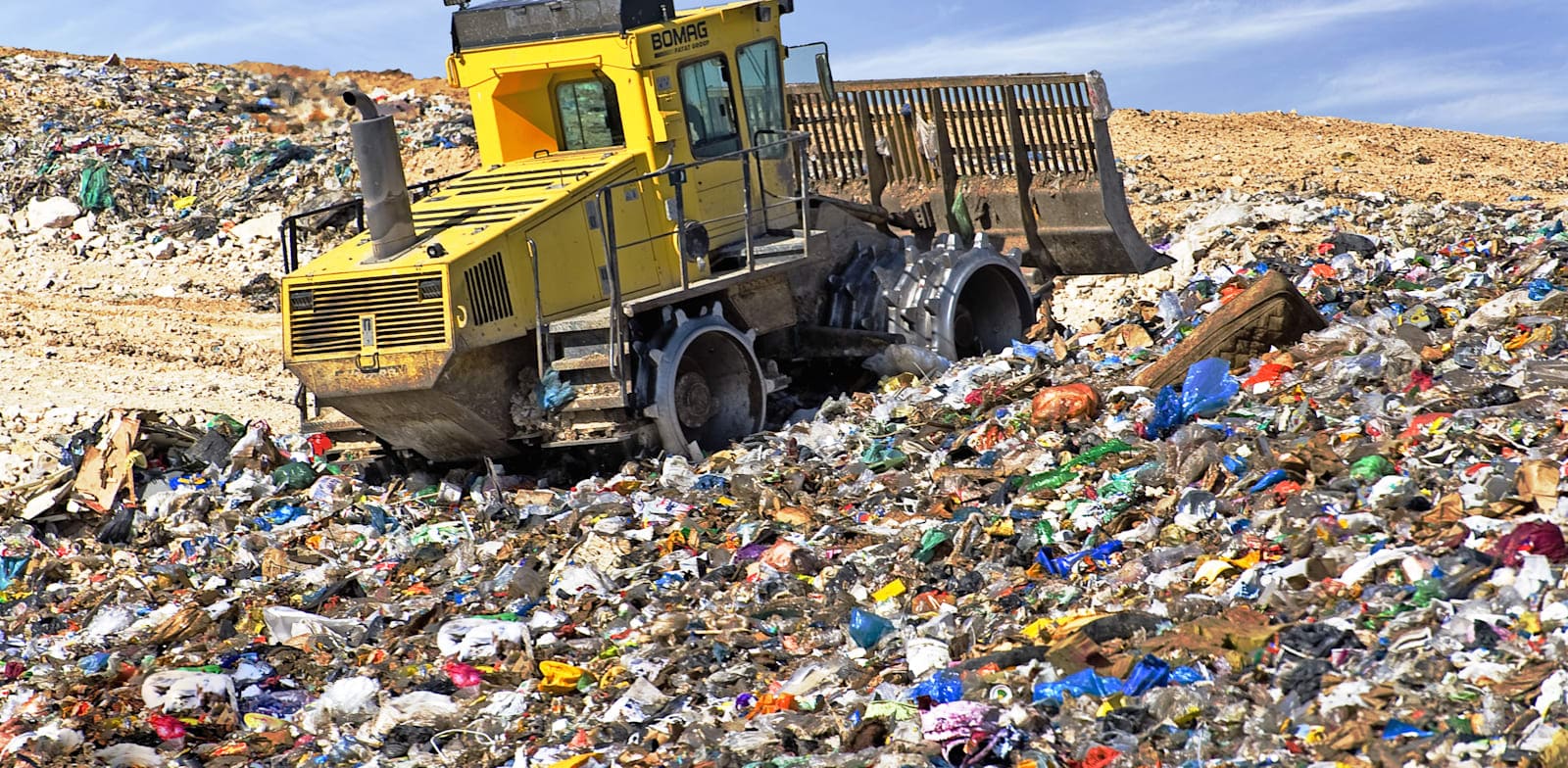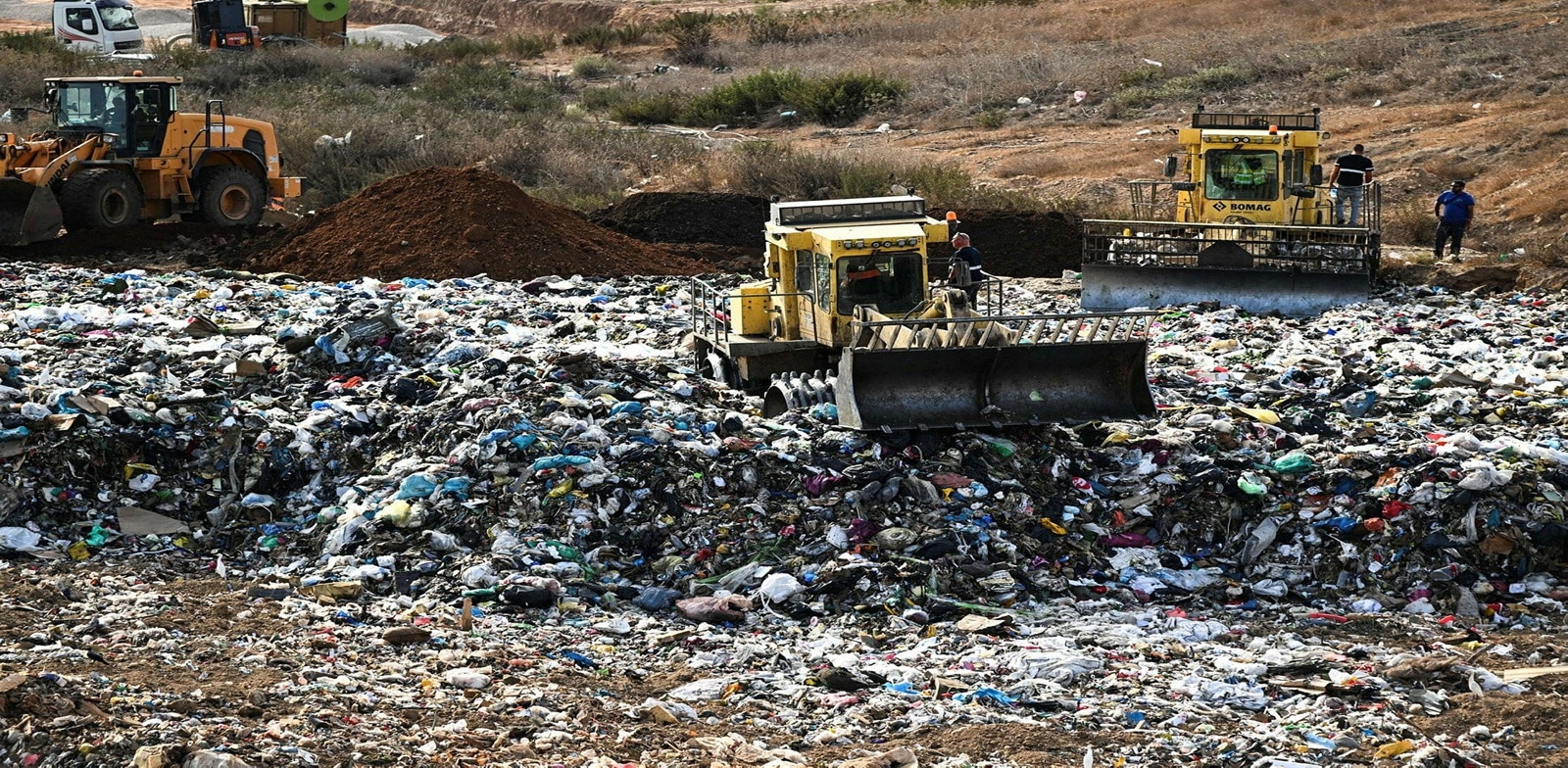

Local authorities claim that the increase in landfill disposal fees amounts to approximately NIS 150 million per year, a burden that could lead to their financial collapse. The broader crisis in the sector is making it extremely difficult for authorities to find suitable sites for waste disposal.
The Local Government Center is demanding that the Israel Land Authority (ILA) cancel the system of collecting royalties from waste landfill sites for the use of land. This demand is based on the claim that companies operating the landfills have begun passing on the additional fees, which were set several years ago, to the local authorities.
Local government officials warn that this situation could drive municipalities into financial collapse. This dispute adds to the wider waste disposal crisis caused by a shortage of landfill sites, which further limits the authorities’ ability to find appropriate locations for waste disposal.
About four years ago, the Israel Land Authority decided to change the method used to calculate royalties collected from landfill operators, ruling that operators would be required to pay per ton of waste. The decision was based on the assumption that the change would not harm local authorities. However, according to local government representatives, this assumption has proven incorrect.
Recently, several of the largest landfill sites informed local authorities that they are raising the fees charged to waste collection trucks in order to incorporate the royalty component.
In its appeal to the Israel Land Authority, the Local Government Center stated that local authorities are a “captive customer” of landfill operators, due to the lack of alternatives to landfilling and the fact that approximately 80% of waste in Israel is currently sent to landfills.
Therefore, local authorities have no choice but to pay the additional amount, which accumulates to an annual cost of approximately NIS 150 million. “This represents an extreme lack of reasonableness given the already exorbitant landfill costs,” the appeal states. “Local authorities are facing collapse, and any additional burden could tip the scales. We demand that the Israel Land Authority freeze the royalty requirement and use all the tools at its disposal to prevent the cost from being passed on to the authorities.”
The total amount collected from local authorities for landfilling is influenced, among other factors, by market concentration in the waste disposal sector, which prevents price reductions. Local government accuses the regulators—including the Israel Land Authority and the Ministry of Environmental Protection—of failing to address this concentration, and of not acting to establish waste treatment facilities that do not rely on landfilling, even as landfill fees continue to rise. These facilities include sorting and recycling plants and energy generation from waste. “The Israel Land Authority has the authority and capability to allocate land for the establishment of such facilities while creating economic incentives,” the Local Government Center noted in its appeal.
In recent years, the Ministry of Environmental Protection has initiated the establishment of several waste treatment facilities that do not rely on landfilling. One of the largest among them is the Smart Waste facility, currently under construction in Rishon LeZion, which is based, among other things, on biological decomposition processes that generate gas from which electricity can be produced. The facility is expected to begin operations in 2026, but its operation depends on signing agreements with local authorities to divert their waste to the facility. Due to the general uncertainty prevailing in the sector, signing these agreements has proven difficult.
To date, the Ministry of Environmental Protection has failed in its attempts to regulate landfill disposal prices and therefore turned to the inter-ministerial pricing committee to formulate recommendations. Although the committee reached conclusions, the Ministry of Finance has so far delayed their implementation. About three weeks ago, Minister of Environmental Protection Idit Silman and her ministry’s Director General, Assaf Yazdi, approached the Ministry of Finance and demanded that the committee be convened to reach a final decision on the matter.
In response, the Israel Land Authority stated:
“The royalty system was designed to create certainty. The transition to this system and the royalty rates by waste type were carried out in full and close coordination with the Ministry of Environmental Protection, with responsible implementation and at conservative, cautious levels. An economic analysis recently conducted by the Authority demonstrated that the royalty rates are significantly lower than the customary tariffs in the sector and leave wide profit margins for landfill operators, meaning there is no justification for passing the cost on to end consumers. If there are market failures as claimed, regulatory bodies such as the Competition Authority or the inter-ministerial pricing committee should address them; however, this is unrelated to the royalty mechanism and is not within the Authority’s mandate. The claim regarding land allocation is unfamiliar to the Authority. The regulator in this matter is the Ministry of Environmental Protection, and the Israel Land Authority works with it to provide land-related solutions for waste treatment facilities as required.”