

The Recycling Narrative vs. Reality: Why Israel Still Buries Its Waste
Arie Zauberman, Smart Waste Venture General Manager
The Times of Israel, March 29, 2026
For years, the conversation has revolved around a “recycling revolution” and the promise of a circular economy.
But when you look at the numbers, a different reality emerges.
In 2024, Israel generated 6.4 million tons of municipal waste – a 2% increase year over year. At the same time, recycling volumes dropped by 1.56 million tons compared to 2023.
This isn’t a temporary fluctuation. It’s a structural gap between ambition and execution.
The contrast becomes even sharper in a global context. Roughly 85% of Israel’s waste still ends up in landfills. In the European Union, that figure is closer to 35%, and across OECD countries, about 42%.
On a per capita basis, Israel produces 691 kilograms of waste annually – far above the 534-kilogram average in developed economies. Europe isn’t just generating less waste; it has built systems that know how to deal with it. Austria recycles around 60% of its waste, and in parts of Italy, that number reaches 80%.
So what’s holding Israel back?
It’s not technology.
Israel has the engineering capability and is already investing in advanced recycling and treatment facilities. The real issue lies elsewhere: policy design and economic incentives.
As long as landfilling remains the cheapest and easiest option for municipalities, recycling will never scale. Israel’s landfill levy remains significantly lower than in most European countries, where pricing mechanisms are deliberately structured to discourage landfill use. In some cases, untreated waste is simply banned from being buried.
And here’s the missed opportunity: nearly 70% of what we currently define as “waste” isn’t waste at all. It’s raw material – capable of being converted into energy, reused in industrial processes, and reintegrated into the economy.
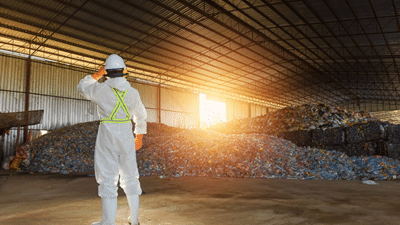
Instead, much of it is mixed, buried, and effectively lost.
This is more than an environmental issue – it’s an economic failure. Valuable resources are being taken out of circulation, while the costs of pollution and land use continue to rise. In practice, we are paying twice: once for the damage, and again for the lost value.
The common response – adding more color-coded bins or expanding public awareness campaigns—misses the point.
Without the right infrastructure, these efforts cannot deliver meaningful results.
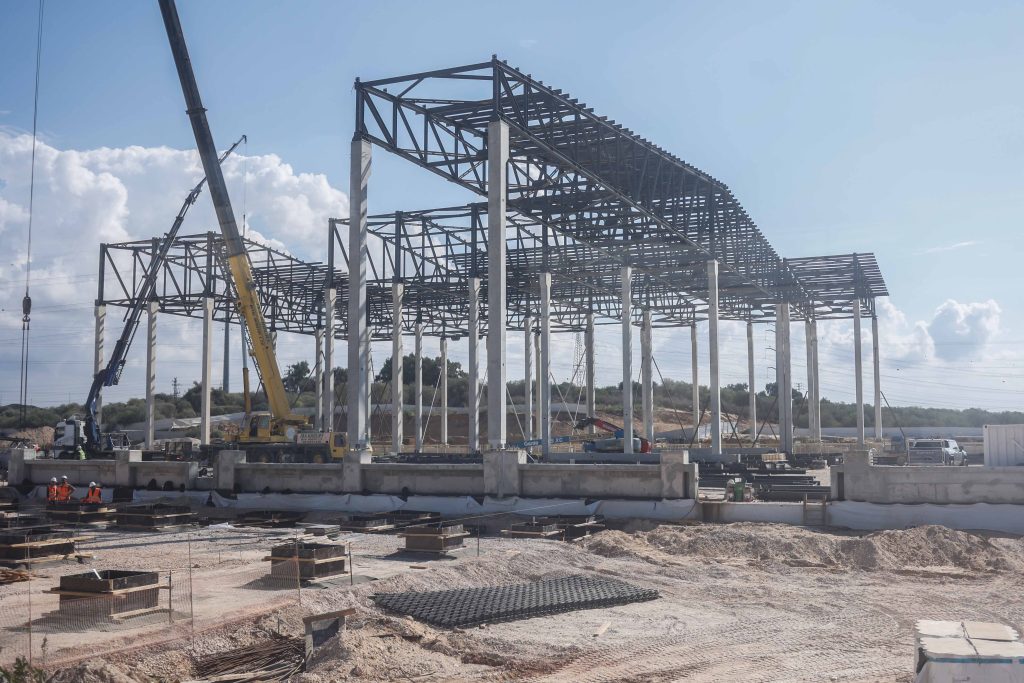
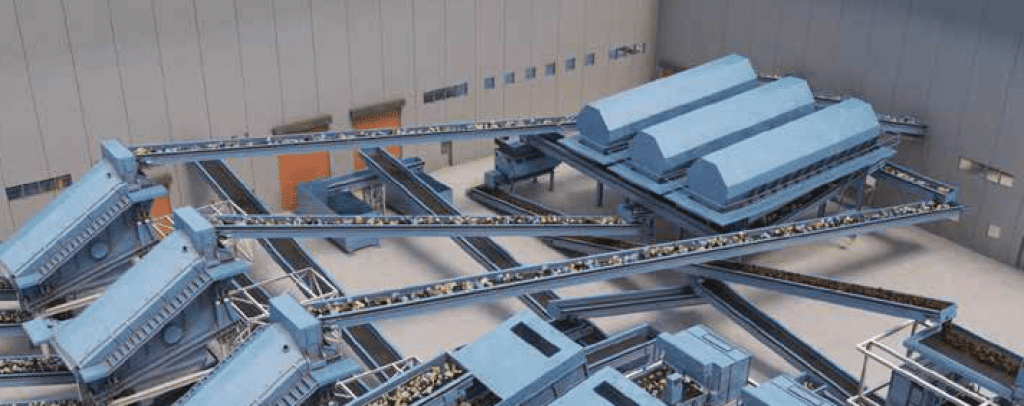
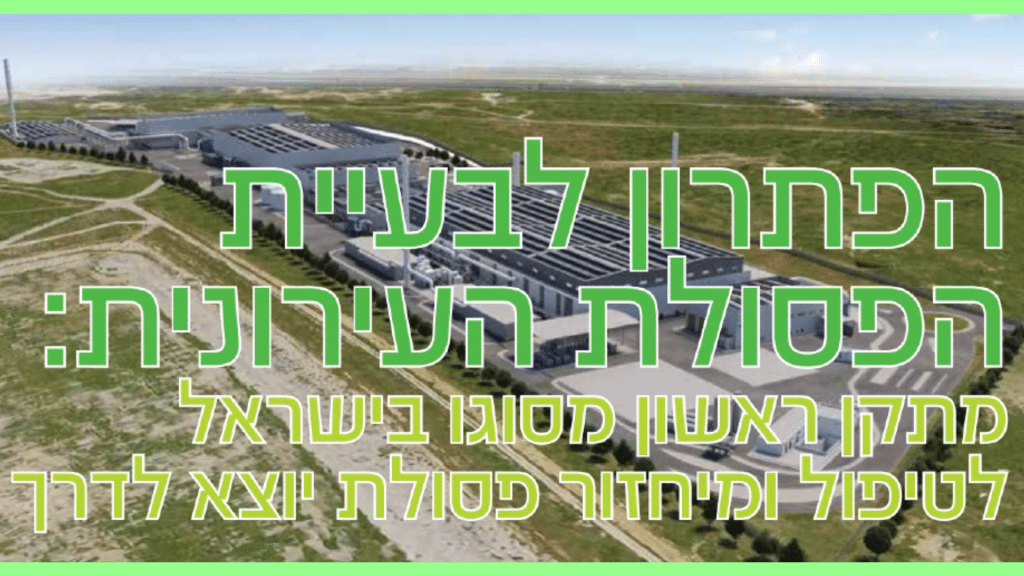
Real change depends on large-scale investment in integrated waste treatment systems: facilities that sort, recover, and process materials at industrial scale. In such systems, metals, plastics, paper, and cardboard are separated and reintroduced into the supply chain. Organic waste is processed biologically, producing biogas and generating renewable electricity.
This is how landfill volumes can be reduced by more than 50%.
This is how a circular economy actually works – not as a concept, but as infrastructure.
The path forward is not complicated – but it does require decisive policy.
Landfilling must become economically unattractive. That means significantly increasing landfill taxes and redirecting those funds toward industries that rely on recycled materials. It also means creating incentives for municipalities and private operators to develop viable alternatives.
Regulation plays a critical role as well. Governments must set clear standards—not only for waste treatment, but also for the use of recycled materials in manufacturing. In the long term, landfilling untreated waste should not just be discouraged—it should be prohibited, much like the discharge of untreated wastewater into natural ecosystems.
Israel does not lack knowledge or technology.
It lacks a coherent, consistent policy framework.
And time is not on our side.
Every day, thousands of tons of recoverable materials are buried instead of reused. Every day, the gap between potential and reality grows wider.
The real question is no longer whether change is possible.
It is whether we are willing to make it happen.
Original article (Hebrew):
https://www.zman.co.il/666549/